Explore

The benefits of trad-coding
Migrated a portfolio from unmaintained Gatsby to Astro after evaluating Next.js and Contentlayer trade-offs

LLM Tooling for Portfolio Writing
Built a git-narrative tool that analyzes commit history, file churn, and diffs to produce structured article scaffolds with development arcs and problem summaries

Local LLM
Engineered a reproducible local coding-agent environment using Nix and llama.cpp, enabling Pi to run against a shared Qwen model on an RTX 3090

Jar Candles and a Second Toolchain
Migrated a CAD toolchain from Jupyter to marimo by forking and refactoring cad-viewer-widget, creating marimo-cadquery, and building purpose-built map and mesh viewer widgets
Obsidian Remotion
Extracted TypeScript blocks from Markdown and synthesized them into virtual TSX modules for live, type-checked Remotion previews inside an Obsidian plugin
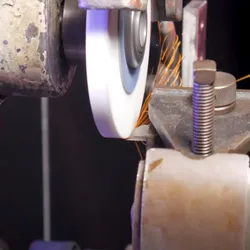
Grinding a custom groove cutting tool
Used a Cincinnati MT2 tool and cutter grinder to create a 0.090" groove cutter

Turning the Site into a Portfolio Editorial Machine
Built a content-addressed blob storage system to deduplicate project media across repos while preserving git-driven directory structure and rsync-based recovery

Bringing It to Market
Developed terrain-derived candle products using digital topography, custom molds, and iterative fabrication
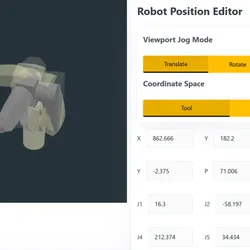
Implementation
Built web-based robot control interface with visual playback preview using JavaScript motion approximation

Repeatability and Product Shape
Implemented dict-hash-based memoization and disk caching for mesh generation to eliminate redundant geometry computation during iterative design

Tracked physical artifact provenance by linking mold lineage to wax-cam commit hashes, enabling reproducible terrain-derived candle designs

Mountains Into Geometry
Built a reproducible terrain-to-geometry pipeline using Jupyter notebooks, TouchTerrain, and CADQuery to iterate on 3D mountain models for fabrication

What Is the Project?
Built a CAD/CAM workflow to transform real terrain data into iteration-ready geometry for wax sculptures

Framework & Dependencies
Built an 800-line frontend framework using signals and Web Components to implement functional reactive programming for state-driven UI updates
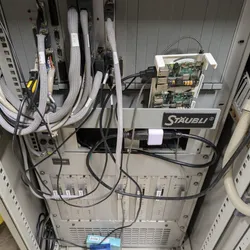
Operating System & Deployment
Replaced fragile WSL serial passthrough with an internally mounted Raspberry Pi, solving persistent driver and USB connectivity issues for embedded robot control
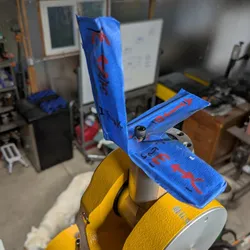
Prototype Software
Built a terminal-based control workflow using Python over RS232 to program a Staubli robot after the teach pendant failed
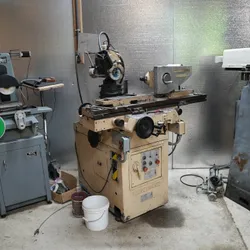
Cincinnati MT2 Tool Cutter Grinder
Despite its obsolescence, nothing can compare to the flexibility and sheer number of axes of a tool-cutter-grinder
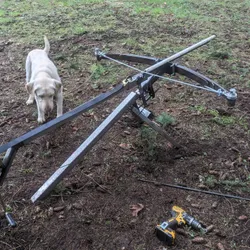
Leaf Spring Crossbow
Designed and fabricated a custom bow system with integrated trigger mechanism and adjustable elevation hinge

Boot Disk SD Emulation
Replaced fragile floppy-disk boot system with ZuluSCSI SD card emulator to eliminate single point of failure on industrial robot controller
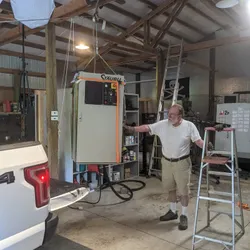
Transport & Rigging
Acquired and transported a 330KG industrial robot for $1,800 using improvised strapping and winch rigging

Northwest Waxworks
Built a digital fabrication pipeline converting mountain terrain data into 3D-printed candle molds, automating geometry tuning too complex for manual adjustment
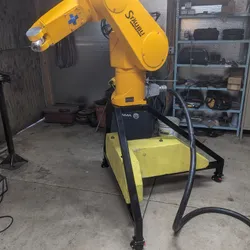
Reverse-engineered a legacy Staübli RX90 robot controller and replaced its failing floppy boot disk with a ZuluSCSI SD card emulator after six disassembly iterations to derive a working boot image
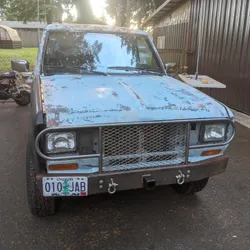
Bronco Bumper
Fabricated custom front and rear steel bumpers with integrated shackle mounts and receiver hitch for a Bronco
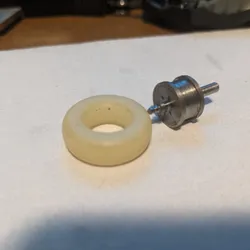
Small part: Mouse Axle
Designed and machined a miniature replacement part to repair a mechanical mouse from scratch
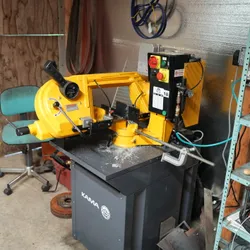
KAMA 997 Chop Saw
Large mitering bandsaw for rapid stock removal
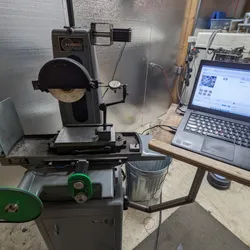
CNC Surface Grinder Retrofit
Designed and machined custom brackets, mounts, and driveline components to retrofit a manual surface grinder with CNC-driven motion
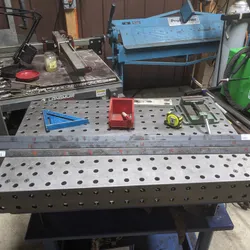
Fixture Table
Mounted a cast-iron fixture table to my adjustable-height Portelevator cart
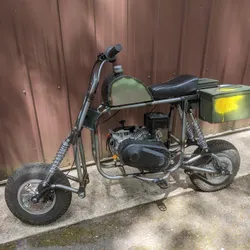
Full Suspension Mini Bike
Designed and hand-fabricated a complete custom motorcycle frame from scratch, progressing from initial drawings to a ridable prototype

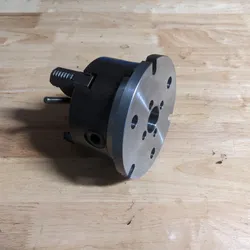
Chuck Back Plates
Machined a chuck mountaing plate for my 4th-axis using turning and facing operations on a lathe
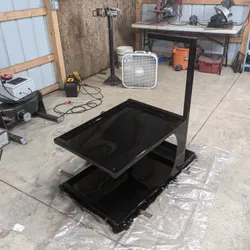
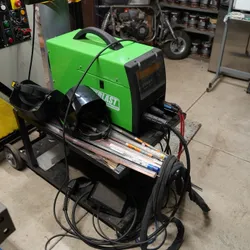
Weld Cart (for everlast)
Designed and fabricated a weld cart
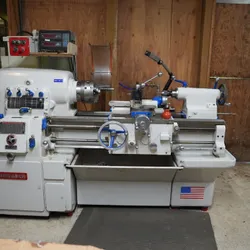
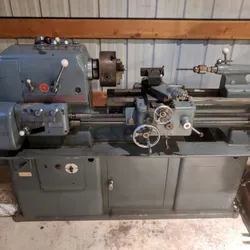
Monarch Series 61 13x30
A beautiful late 1950s toolroom engine lathe
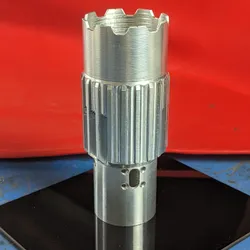
Festival Totem
Fabricated aluminum replacement housing for a 3D printed festival totem to resolve PLA thermal failure
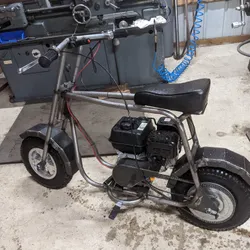
Hardtail Mini Bike
After buying my friends each a mini-bike kit this was our first attempt

Static Analysis Choreography Tool
Built features on a Haskell back-end powering a static-analysis choreography tool
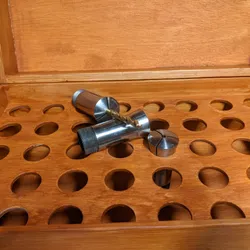
5C Collet Box
Fabricated precision box-joint assemblies with tight tolerances for custom collet seating
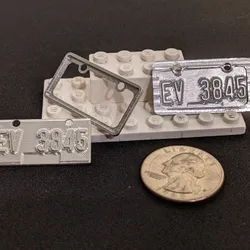
Scale License Plate
Machined a 1-10 scale license plate for a coworkers RC car project
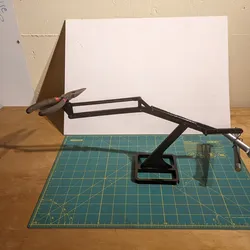
Motivation
Revived decades-old industrial robot hardware by emulating legacy SCSI storage with a modern SD card
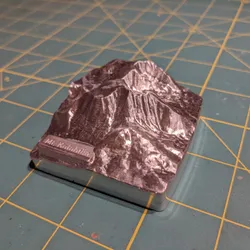
Aluminum Mountains
Designed and machined custom aluminum mountains as a christmas-present project
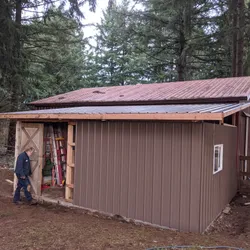
Extending the Shop
Built an extension to the shop to isolate fabrication from metrology and machining
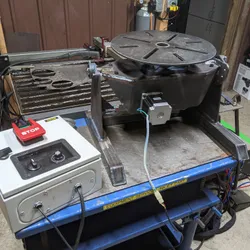
Welding Positioner
Built a welding positioner supporting several hundred pounds with infinitely variable rotation speed and 90+ degree tilt using sheet metal and timing belts
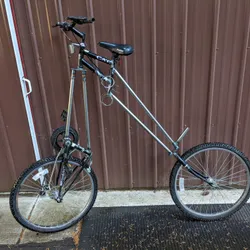
Penny Fakething Freak Bike
Converted a bicycle to a penny-farthing configuration, achieving geometry precise enough for hands-free riding

Owning the Seams: Plugin Forks and Toolchain Drift
Recovered a broken Gatsby publishing stack from years of toolchain drift by pinning dependencies to GitHub commits and vendoring unstable components
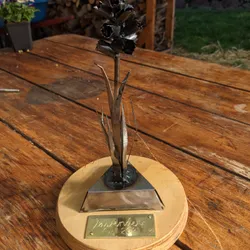
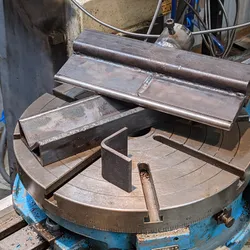
DIY Press Brake
Made a press brake to assist with other shop projects
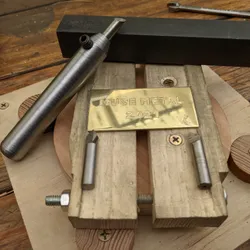
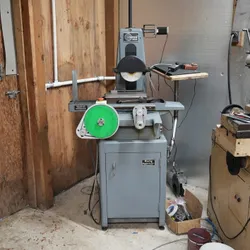
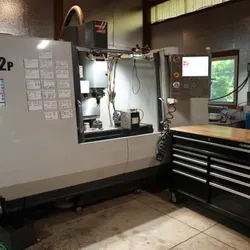
Haas TM2 Toolroom Mill
Restored a used Haas TM2 mill by performing full teardown cleaning and configuring washdown and spindle coolant systems
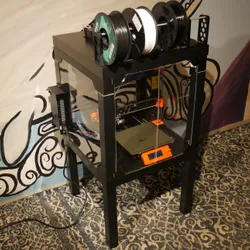
Fabricated a custom 3D printer enclosure from 3D-printed PETG components, IKEA Lack tables, and table-saw-cut acrylic panels
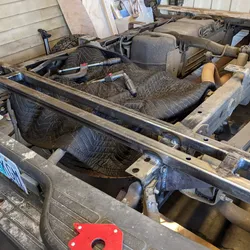
Truck Crane Frame Fabrication
Designed and welded a custom sub-frame to mount a crane on a work truck for stone sculpting operations
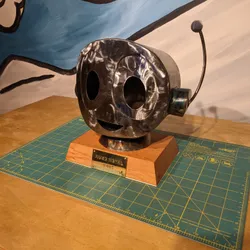
Company Logo Sulpture
Designed and fabricated a sculpture of the logo of the company I worked for
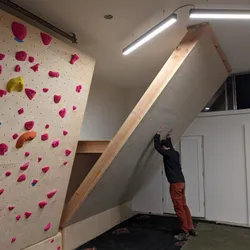
Climbing Wall
Helped a friend construct a home climb wall including a LED project board and a tilting spray wall
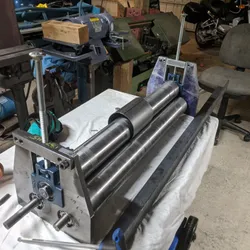
Slip Roller
Fabricated a precision slip-rolling machine by combining plasma cutting for rough shapes with CNC machining for critical interfaces
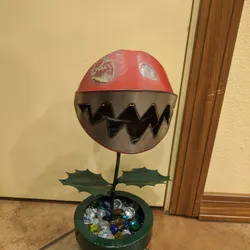
Pirhana Plant
Created a sculpture as a gift for a friend
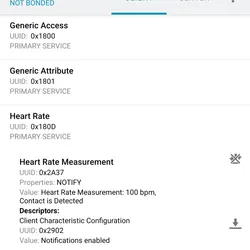
Packaged esp-idf build system into a standalone Rust library to enable reusable ESP32 Bluetooth development

Implemented ESP32 Bluetooth Low Energy heart rate service in Rust using the NimBLE stack by translating and adapting C reference implementations
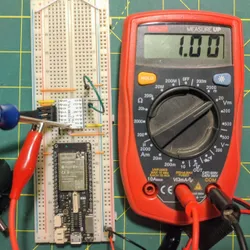
Replaced L298N H-bridge with TMC2208 stepper driver to reduce GPIO overhead, eliminate overheating, and simplify microstepping control
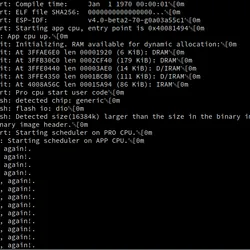
Using Nix to write rust on the esp32
Packaged a reproducible Rust cross-compilation toolchain for ESP32 microcontrollers using custom Nix derivations
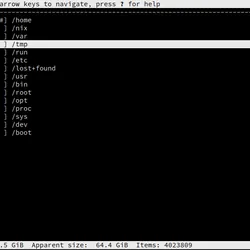
Recovering disk space in NixOS
Diagnosed NixOS disk space usage with ncdu to identify the largest space consumers across system and user directories
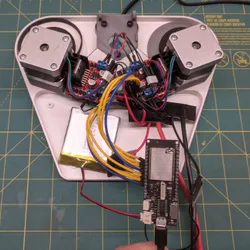
Driving steppers with the RMT module
Resolved ESP32 RMT looping artifacts by disabling software transmit interrupts before enabling hardware loop mode, achieving precise square wave generation
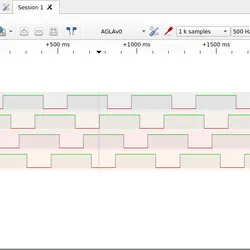
Using an Arduino as a logic analyzer
Repurposed an Arduino Uno as a multi-channel logic analyzer to capture and inspect digital signals on ports 8 through 11
Using an ESP32 as a logic analyzer
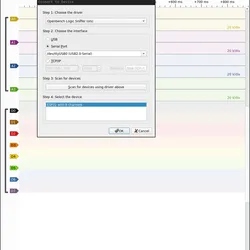
Repurposed an ESP32 as a SUMP-compatible logic analyzer by integrating esp32_sigrok with sigrok and Pulseview for capturing stepper motor timing signals
Connecting an ESP32 to android with bluetooth
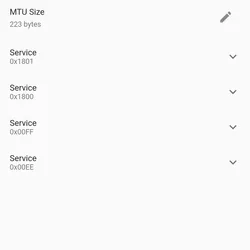
Established BLE GATT server on ESP32 using ESP-IDF, upgrading the SDK to resolve core panic memory allocation issues
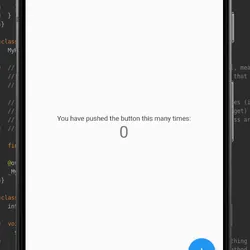
Android development on NixOS
Configured a reproducible Flutter and Android development environment on NixOS using shell.nix with custom package overlays
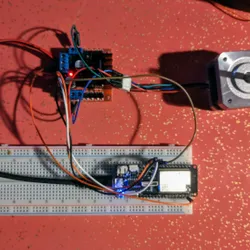
Spinning a Stepper
Set up a reproducible ESP32 ESP-IDF development environment on NixOS by patching Nix packages and debugging the VSCode Espressif extension from source
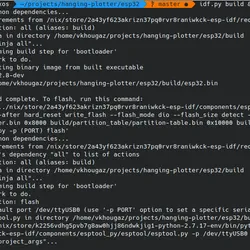
ESP32 development in NixOS using VSCode
Built reproducible Nix derivations for the ESP-IDF SDK and xtensa-esp32 toolchain on NixOS
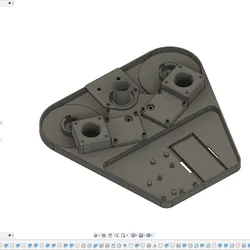
Post Print Iterations
Rapidly iterated on 3D printed mechanical assemblies to resolve motor arm fit, shaft clearance, and standoff interference issues
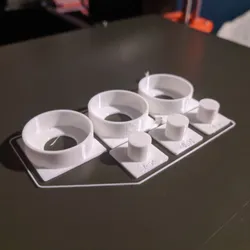
First Steps - Pinning an idea down and checking assumptions
Designed a dual-point string art plotter using 3D-printed parts, stepper motors, timing belts, and an ESP32 microcontroller
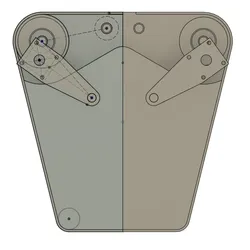
Hanging Plotter
Designed a low-cost hanging plotter mechanism using 3D printed components and Arduino control

Embedded and Firmware
Firmware and bring-up on ESP32 and Arduino targets, in C, C++, and Rust
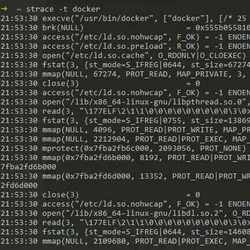
Diagnosed a 30-second Docker startup delay on WSL2 by tracing syscalls with strace and identifying a stale DOCKER_HOST pointing to an unreachable TCP endpoint
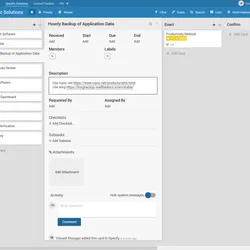
Automated daily task digest emails by querying the WeKan API and scheduling execution with cron
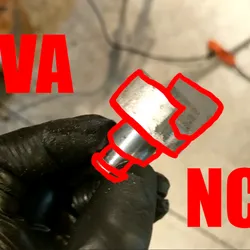
Machining a camera mount
Machined a custom camera mount to attach a cell phone to a tripod head with a quick release plate

Publishing Dense Technical Work Without Watering It Down
Built a custom Gatsby remark plugin to embed Jupyter notebooks inline within markdown articles, preserving experiments and code as narrative evidence

Simplifying Jupyter integration by eliminating heterogenous lists
Resolved heterogeneous content-type problem by embedding Jupyter notebooks as markdown custom blocks instead of abstracting into virtual post types
Adding Jupyter Notebook (and Rust) to Gatsby
Integrated Jupyter Notebook execution into a Gatsby static site using gatsby-transformer-ipynb to render live code output at build time
Correcting a bug in notebook-render
Debugged a server-side rendering crash in @nteract/notebook-render caused by remark-rehype producing unhandled "element" AST nodes

Inventing a Content Model for Real Projects
Designed a Gatsby content architecture supporting articles, series, clusters, and tags with custom page-generation logic

Writing GatsbyJS configuration in Typescript
Migrated GatsbyJS node configuration to TypeScript using ts-node, exposing implicit assumptions about GraphQL result shapes and making page-generation logic verifiable at compile time

Worse is Better: Setting up Gatsbyjs drafts
Replaced a feature-branch workflow for article drafts with a filesystem-based approach using a dedicated drafts folder in Gatsby.js
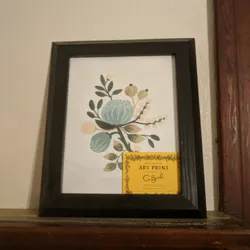
Making a Custom Frame: Practice
Built a custom picture frame from salvaged 2x4 pine, translating CAD-derived cross-section calculations into physical fabrication with miter and table saw cuts
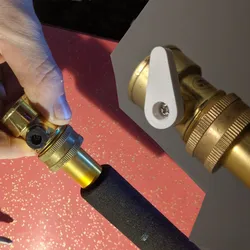
Designed and 3D printed a replacement valve handle for a broken garden sprayer using caliper measurements and CAD
Picture Framing
Practicing woodworking fundamentals through the methodical craft of picture frame construction
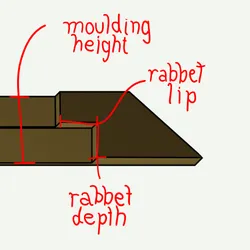
Making a Custom Frame: Theory
Calculated custom picture frame dimensions by accounting for rabbet depth, moulding width, and component layer stackup

Upgrading Shop Air Compressor
Hard-plumbed an air compressor to provide convenient access to compressed air in the shop
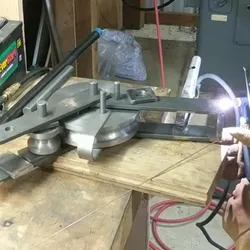
Machining a Tube Bender

Native and Hybrid App Development
Developed native iOS applications using Objective-C and Swift for platform-optimized mobile experiences

Full Stack Web Development
Delivered full-stack web applications spanning frontend design with Adobe XD, React/TypeScript middle-end, and backend services in Python, Go, and Rust

Project Concept
Learned tube bending techniques through a hands-on collaborative project with a friend

Headless CRM and Auction Storefront
Designed a site from marketing brief through headless CRM data model to shipped web and mobile clients

Evolved a static site into a full publishing and editorial system through seven years of iterative tooling changes

From Static Site to Publishing System
Migrated portfolio from Zola to Gatsby and React to gain component-driven layouts, richer plugin ecosystem, and more flexible theming
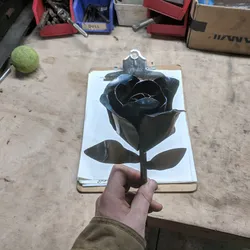
Metal Rose
Engineered layered petal assemblies by designing and folding individual petal sections into a cohesive structure
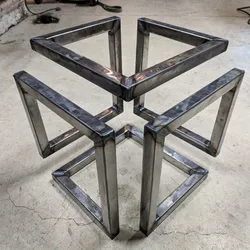
Welding an Infinity Cube
Documented end-to-end fabrication workflow from material marking through final assembly
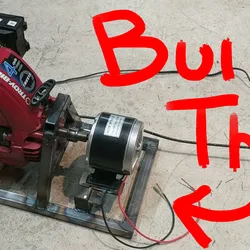
Discovered that applying power to the motor restarts the engine, enabling microcontroller-based engine control
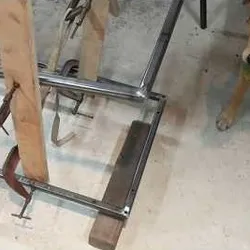
Built a welding cart as a first project to practice and refine basic welding techniques
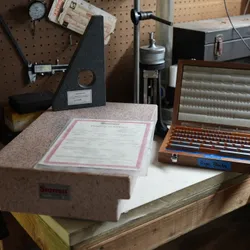
Metrology
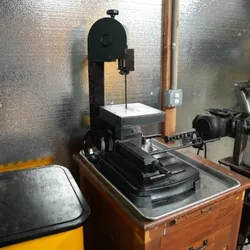
Klutch Metal Cutting Bandsaw
3/4 HP horizontal/vertical bandsaw with 4-1/2" x 6" cutting capacity
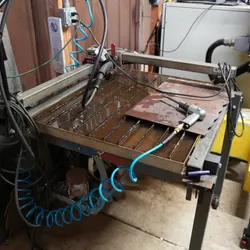
Langmuir Crossfire
CNC plasma cutting system with cantilevered gantry for precision sheet metal work
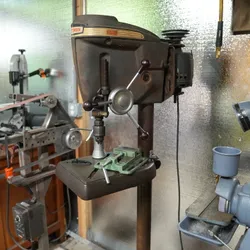
Pedestal Tools
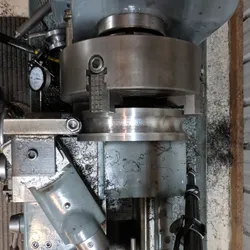
Some of the most productive tools in the shop are those that are fastest to use
Woodworking
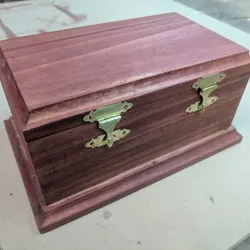
Crafted functional furniture and fixtures including a redwood jewelry box, custom standing desk, and shop workbench

Short Posts

Diagnosed a Go runtime panic in Kopano's kwmserverd by tracing a nil pointer dereference to a missing --iss flag and patching the Docker startup command
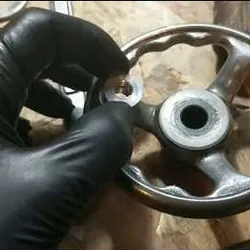
Mr Fixums' Lathe Handwheel Repair
Repaired structural components on a vintage Harrison L6 Mk1 lathe using aluminum welding techniques
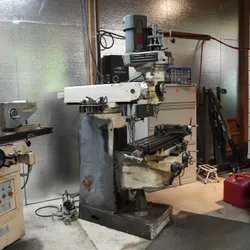
Lagun FT1
Bridgeport-clones are some of the most flexible milling machines
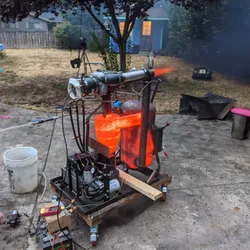
Turbofurnace

Video Stream Management Platform
Rebuilt complex PHP legacy systems in modern unit-tested Java alongside a new React front-end
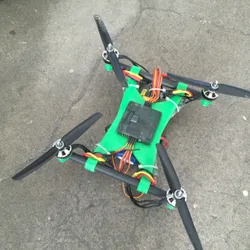
3D Printed Drones
Designed and printed a drone

Desktop Organizer
Article content is missing — please provide the full text to generate blurbs

Bosswatt Prototype
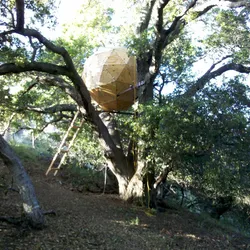
Geodesic Treehouse
Manufatured and installed a geodesic treehouse