First Steps - Pinning an idea down and checking assumptions
The design process has to start with validating the basis for decisions
Making a guess
When starting a new project there is a massive spread of potential solutions and it is the job of the designer to narrow down the field until a feasible series of steps for production emerges.
Project goals
It is important to set a clear direction to refer to whenever there are outstanding questions. In this project the rough goals are:
- Draw an image on a flat surface
- By hanging from two points
- Using common materials
- And being easy to use
Prior art
This has been done before, see the work by fredrik stridsman and on homofaciens
Much of the initial code and feasability comes from how straightforward their guides are
Pinning an idea down - First Constraints
There are an enormous number of ways the project goals can be fufilled. By making high level intuitive decisions the decision space can be reduced to a more tractable level. Pinning an idea down can be difficult and by evoking the metaphor of jamming pins into an insect we can
- Build the parts using a 3d printer to allow rapid prototyping and more flexible geometry
- Use stepper motors to control the position of the plotter - readily available, accurate, and widely utilized
- Use a timing belt to hang the plotter - accurate, tough, widely available
- Spool the belts internally - more self contained, cleaner aesthetic
- Program motion using an esp32 - allows wireless connectivity, familiarity from past projects, have on hand
- Target expo whiteboard markers - they’re the largest marker, very common, and narrower drawing implements can be shimmed to fit
An eye for the future
One lofty goal for the project is to eventually productize, resulting in an initial higher complexity in order to experiment with more risky design options. Target the most risky part of the project first to bring predictability to the rest of the project as soon as possible.
In addition the wireless connectivity of the esp32 means an app can be added to smartphones in order to control the plotter.
First design
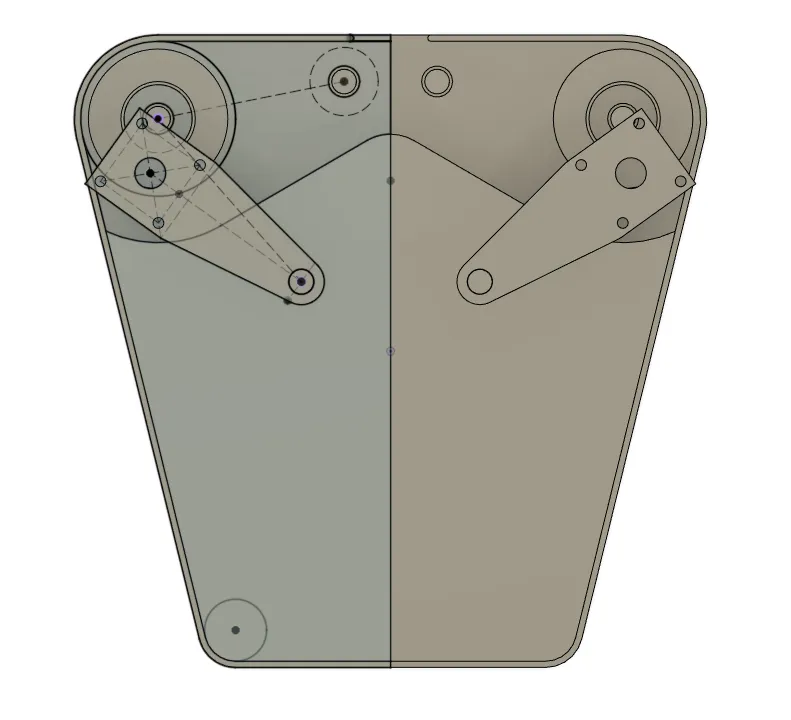
This design uses the weight of the plotter to force the motors against the spools. Since there will be a decent amount of force involved some skateboard bearings are added.
Checking assumptions
The skateboard bearings (or more specifically 608-2RS) have a 22mm outside diameter and an 8mm inside diameter.
Rather than assume those exact measurements a quick test print was made to check the fit of a 7.95mm, 8.00mm, and 8.05mm inner shaft, and a 21.95mm, 22.00mm, and 22.05mm outer seat.
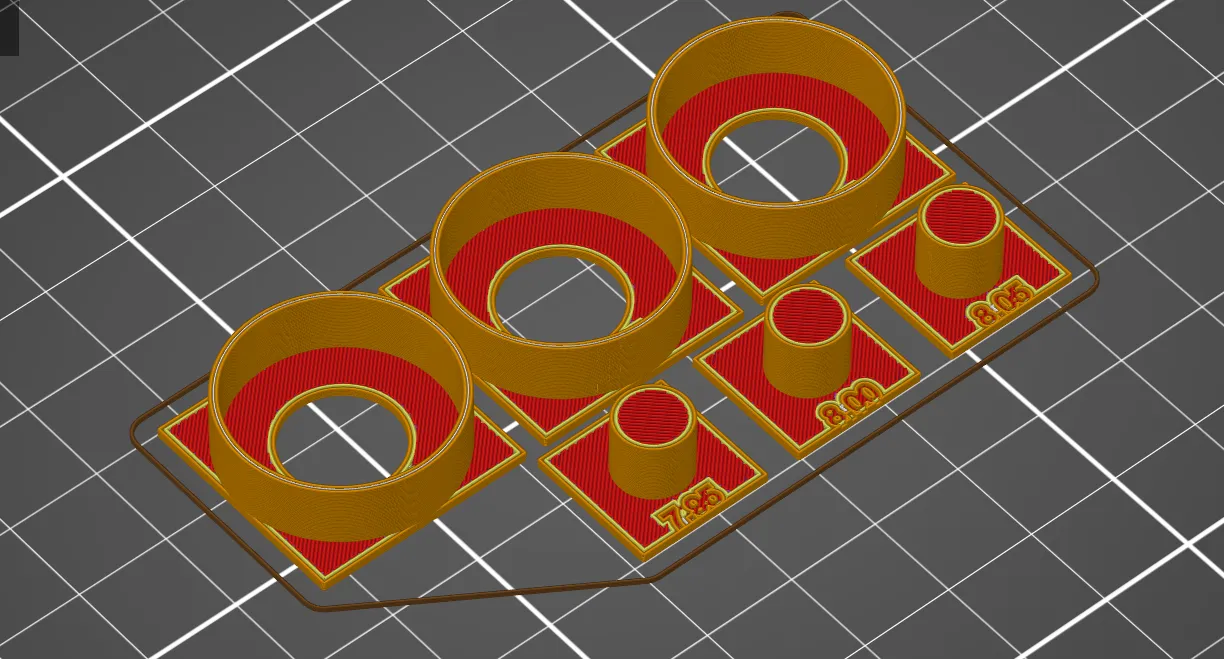
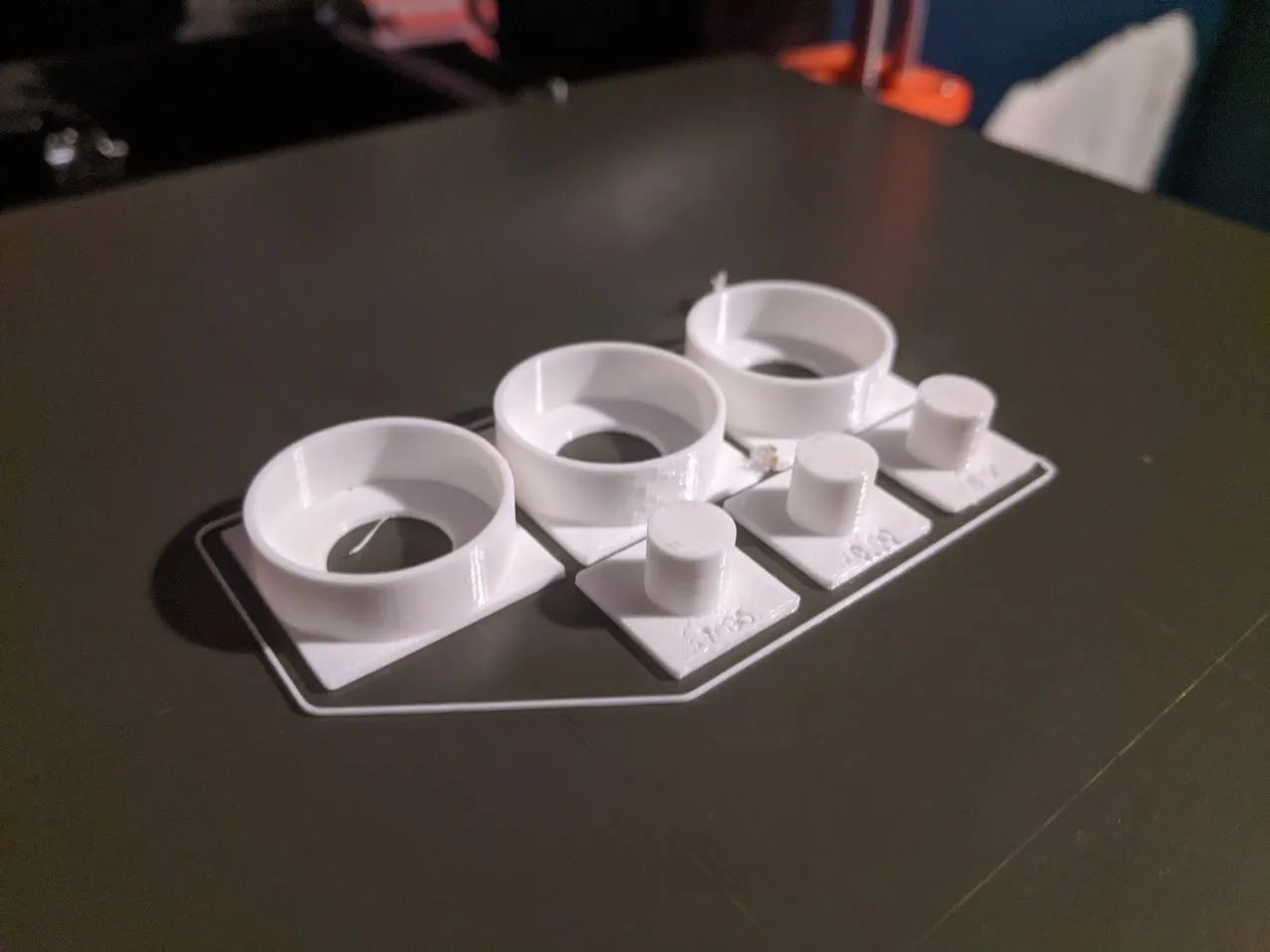
As it turns out a 8.05mm and 22.00mm sleave was the best option, the print was updated to match
First print
Taking this information a rough print was started overnight ready to be tested in the morning
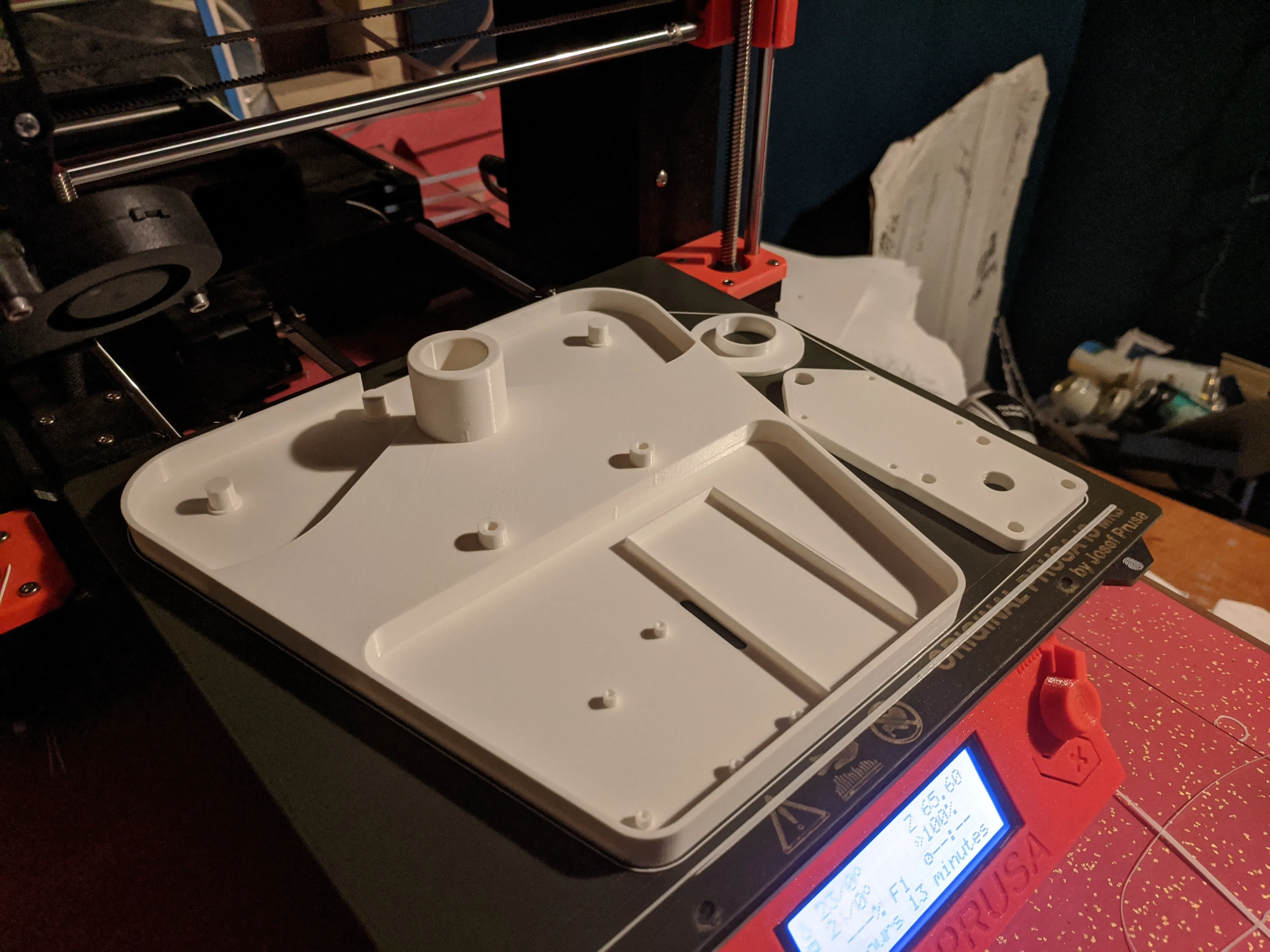
Stay tuned for more updates!